
Beyond Rules-Based Automation
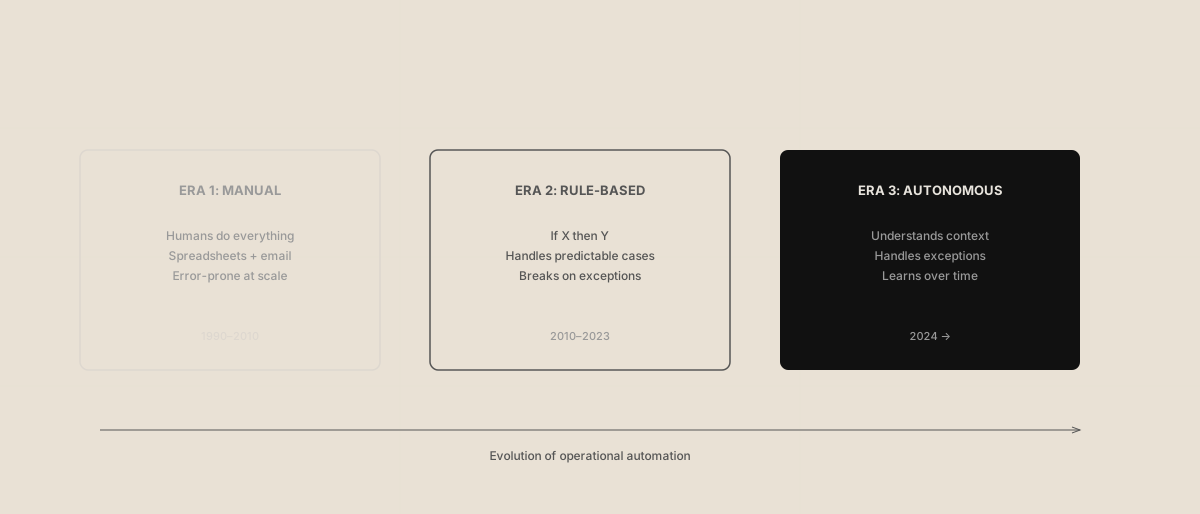
Traditional automation follows rules. If X happens, do Y. This works well for simple, predictable processes. But the real world is messy, and rule-based systems break down when they encounter situations their creators didn't anticipate.
The next generation of automation is fundamentally different. It's built on AI systems that can understand context, make judgments, and adapt to new situations without explicit programming for every edge case.
This isn't science fiction. It's happening now, and it's changing what's possible for organizations of every size.
What Autonomous Automation Looks Like
The distinction matters:
| | Rule-Based | Autonomous | |---|---|---| | Handles exceptions | Fails or escalates everything | Resolves most cases intelligently | | Improves over time | Static until reprogrammed | Learns from every interaction | | Adapts to change | Breaks when inputs change | Adjusts to new patterns | | Setup cost | Low per rule, but rules multiply | Higher upfront, but scales naturally |
Autonomous automation systems can:
- Understand intent rather than just following instructions — they parse what needs to happen, not just what was literally asked
- Handle exceptions intelligently instead of failing or escalating everything — the 80% of edge cases that a human would resolve in 30 seconds
- Learn from outcomes to improve their performance over time — every processed operation makes the system slightly better
- Coordinate across systems to achieve complex, multi-step objectives — orchestrating work across APIs, databases, and human touchpoints
The Human Role Evolves
This doesn't mean humans become irrelevant. It means human roles evolve from operators to supervisors. Instead of doing the work, people set objectives, review outcomes, handle truly novel situations, and improve the systems.
This is a more productive and fulfilling use of human talent. And it's better for business outcomes — you want your best people thinking strategically, not copy-pasting between spreadsheets.
The organizations that understand this shift will attract and retain better talent. Nobody wants to spend their career doing work a machine could handle.
Preparing for Autonomous Systems
Organizations that want to benefit from autonomous automation should start preparing now:
- Document your processes — You can't automate what you don't understand. The act of documentation alone often reveals inefficiencies.
- Structure your data — AI systems need clean, accessible data. If your critical information lives in email threads and people's heads, start there.
- Build feedback mechanisms — Autonomous systems need ways to learn from their results. Build the measurement infrastructure before you build the automation.
- Start small, scale fast — Prove value in one area, then expand. The first successful autonomous workflow builds the organizational confidence and data foundation for the next ten.
The shift from rules-based to autonomous automation is inevitable. The question is whether your organization will lead it or follow.