
The Tool Trap
Most organizations start their AI journey by adopting tools. A chatbot here. An analytics dashboard there. A document processor somewhere else.
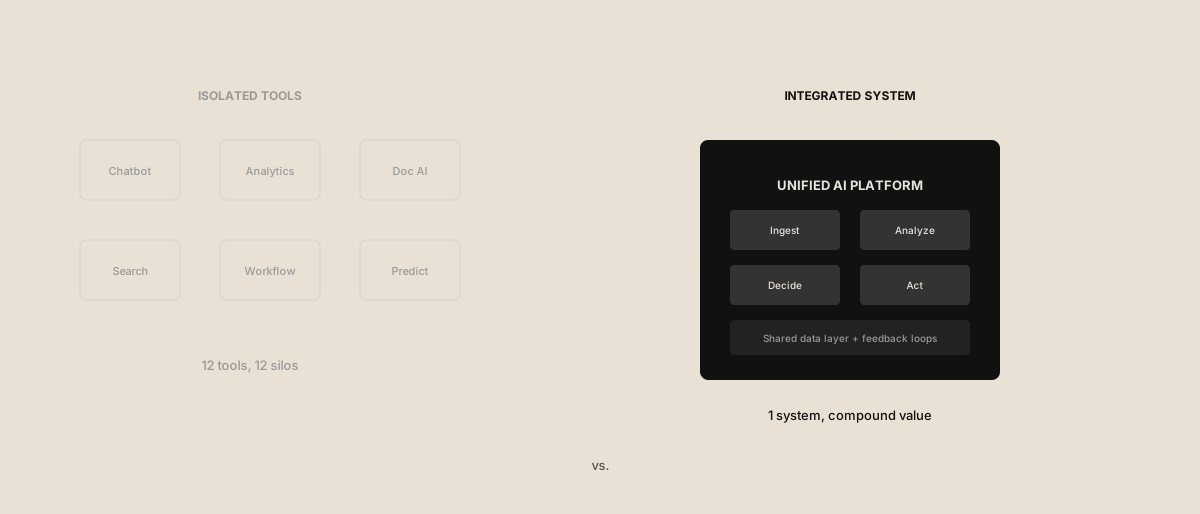
Each tool solves a narrow problem. But collectively, they create a new kind of complexity: tool sprawl. Twelve AI tools, twelve data silos, twelve vendor relationships, twelve points of failure.
The irony is thick: companies adopt AI to reduce complexity, then create more complexity by adopting it piecemeal.
Why Systems Win
An AI system is fundamentally different from an AI tool. A tool performs a task. A system orchestrates multiple capabilities toward an outcome.
Consider the difference:
- Tool approach: An AI that summarizes documents
- System approach: An AI that ingests documents, extracts insights, cross-references with existing knowledge, identifies action items, routes them to the right people, and learns from what happens next
The system approach creates compound value. Each component makes every other component more effective. Data flows between stages. Learning in one area improves accuracy in another. The whole becomes dramatically greater than the sum of its parts.
Building for Integration
When we design AI systems, integration is the first priority — not an afterthought. This means:
- Shared data layers that all components can access and enrich
- Common interfaces that allow components to communicate without custom glue code
- Unified monitoring that provides visibility across the entire system, not just individual tools
- Consistent feedback loops that improve all components simultaneously
The architectural cost of integration is paid once. The value compounds forever.
The companies that win with AI won't be the ones with the most tools. They'll be the ones with the most integrated systems.
The Compounding Effect
Integrated systems get better over time in ways that isolated tools cannot. When one component improves, the entire system benefits. When new data enters one part of the system, insights propagate everywhere.
This is the real promise of AI — not individual tasks done faster, but entire operations reimagined as intelligent systems that learn, adapt, and improve autonomously.
The choice between tools and systems isn't a technical decision. It's a strategic one. And it determines whether AI becomes a competitive advantage or just another line item in your software budget.